 Image 1 of 4
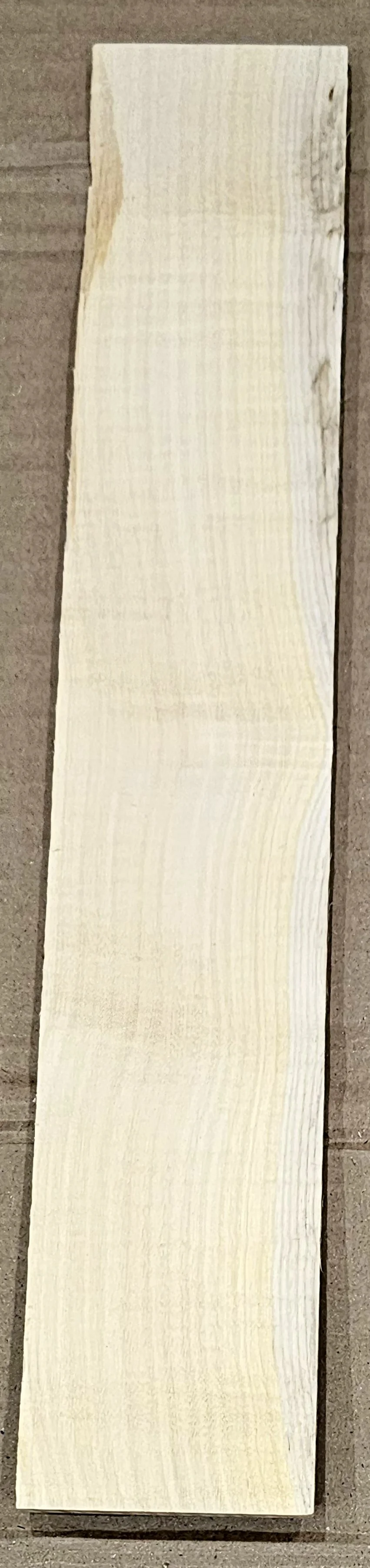 Image 2 of 4
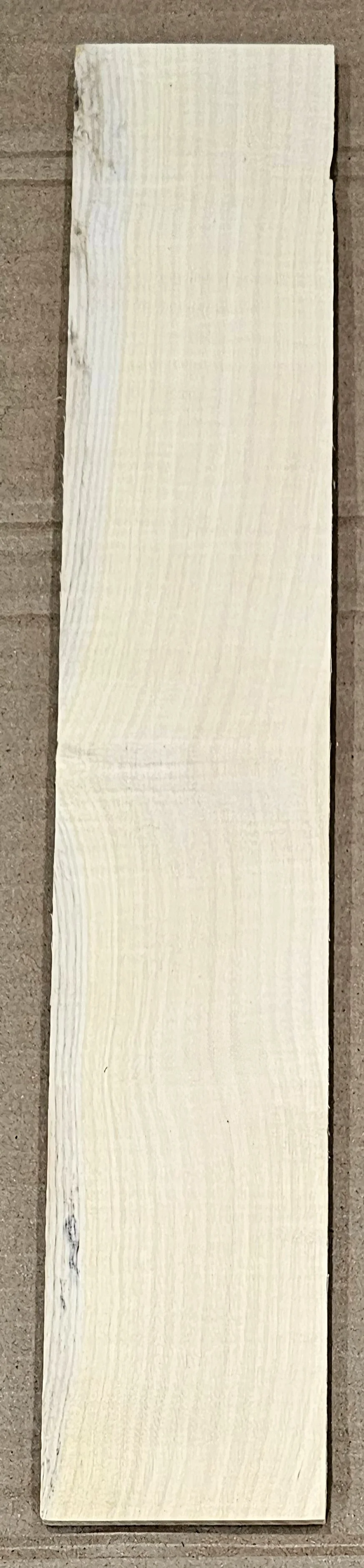 Image 3 of 4
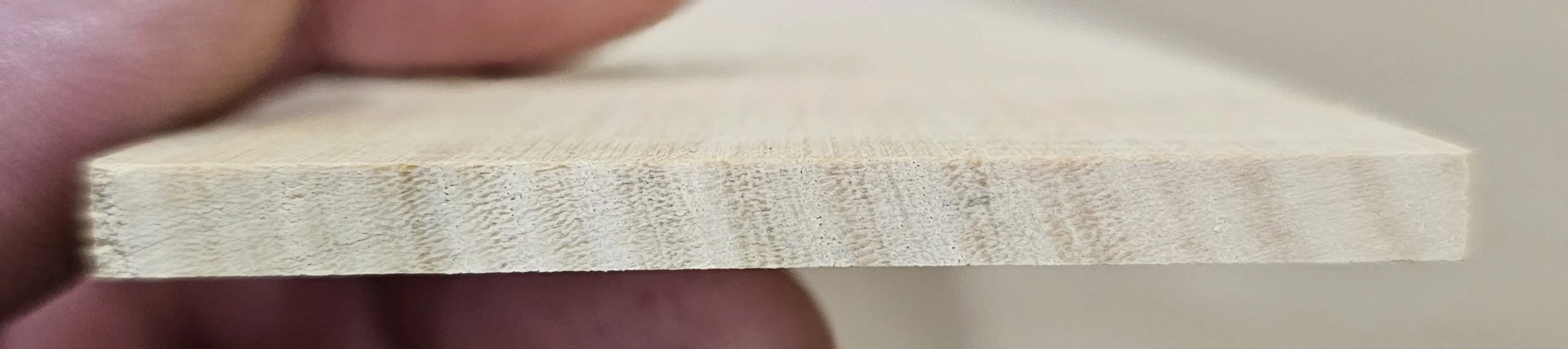 Image 4 of 4
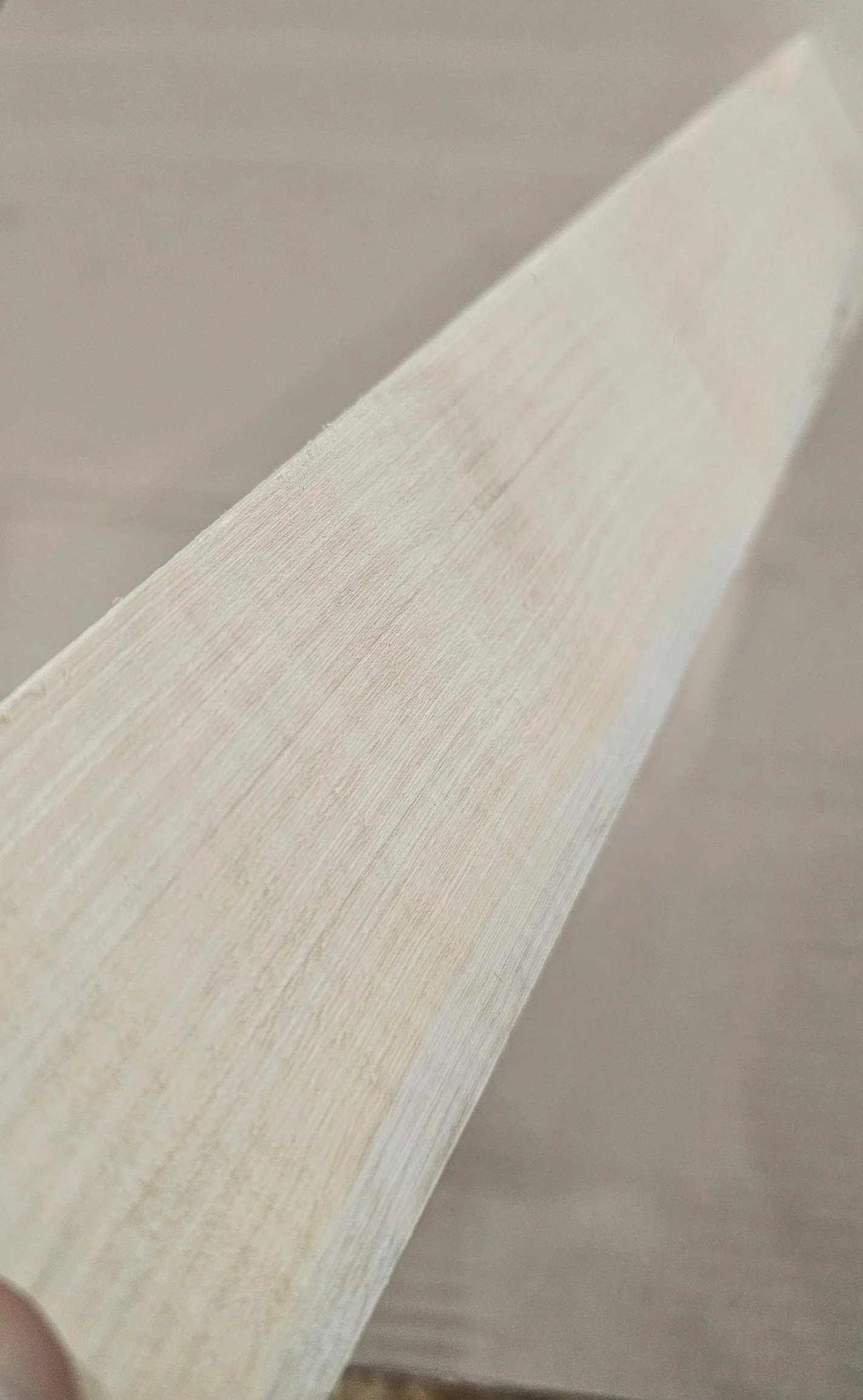
Lovely Satin Box fretboard with mild filddleback figure. It is difficult to see in the photos and rough sanded, but looks beautiful when polished up.
355mm × 62mm × 5mm
Sanded both sides
Satinbox (commonly called satin boxwood) is a dense, fine-grained Australian hardwood prized for its stability, workability, and attractive warm hues. It ranges from pale cream to rich honey-brown with subtle darker streaking and a satiny, low-luster surface when finished; the grain is typically straight to interlocked with very tight, uniform texture. The timber responds exceptionally well to hand and machine tooling, producing clean edges and crisp detail, and it takes finishes evenly, yielding a smooth, silky feel.
Qualities
Density & hardness: Satinbox is a hard, heavy timber with excellent strength and resistance to wear, making it durable for parts that see frequent contact.
Dimensional stability: Low movement in response to humidity changes reduces the risk of warping or cracking, an important attribute for instrument components.
Workability: It machines and sands well, allowing fine shaping, routing and detailed inlay work, with minimal tear-out when using sharp cutters.
Tonal properties: As a dense hardwood, satinbox imparts clear, focused acoustic characteristics — strong sustain and pronounced midrange definition — when used in instrument construction.
Aesthetic: Subtle, even coloring and a satiny surface provide an understated, elegant appearance that complements figured or contrasting timbers. Frequently contains fiddleback figuring
Durability: Good resistance to wear and moderate resistance to decay, suitable for long-lived fixtures and instrument parts.
Uses in Guitar and Luthiery
Bridge plates and bridge pins: Density and hardness make satinbox ideal for transferring string vibrations and resisting wear from saddle contact.
Fingerboards and fretboards: Stability and fine texture allow precise fretting work; produces a smooth playing surface with clear tonal response.
Back and sides
Small parts and decorative elements: Pins, knobs, inlays, and binding blocks benefit from satinbox’s finish and fine detail capability.
Overall, satinbox is an excellent choice for luthiers seeking a durable, stable hardwood that combines refined aesthetics with reliable tonal performance for precision components and detailed work.
Lovely Satin Box fretboard with mild filddleback figure. It is difficult to see in the photos and rough sanded, but looks beautiful when polished up.
355mm × 62mm × 5mm
Sanded both sides
Satinbox (commonly called satin boxwood) is a dense, fine-grained Australian hardwood prized for its stability, workability, and attractive warm hues. It ranges from pale cream to rich honey-brown with subtle darker streaking and a satiny, low-luster surface when finished; the grain is typically straight to interlocked with very tight, uniform texture. The timber responds exceptionally well to hand and machine tooling, producing clean edges and crisp detail, and it takes finishes evenly, yielding a smooth, silky feel.
Qualities
Density & hardness: Satinbox is a hard, heavy timber with excellent strength and resistance to wear, making it durable for parts that see frequent contact.
Dimensional stability: Low movement in response to humidity changes reduces the risk of warping or cracking, an important attribute for instrument components.
Workability: It machines and sands well, allowing fine shaping, routing and detailed inlay work, with minimal tear-out when using sharp cutters.
Tonal properties: As a dense hardwood, satinbox imparts clear, focused acoustic characteristics — strong sustain and pronounced midrange definition — when used in instrument construction.
Aesthetic: Subtle, even coloring and a satiny surface provide an understated, elegant appearance that complements figured or contrasting timbers. Frequently contains fiddleback figuring
Durability: Good resistance to wear and moderate resistance to decay, suitable for long-lived fixtures and instrument parts.
Uses in Guitar and Luthiery
Bridge plates and bridge pins: Density and hardness make satinbox ideal for transferring string vibrations and resisting wear from saddle contact.
Fingerboards and fretboards: Stability and fine texture allow precise fretting work; produces a smooth playing surface with clear tonal response.
Back and sides
Small parts and decorative elements: Pins, knobs, inlays, and binding blocks benefit from satinbox’s finish and fine detail capability.
Overall, satinbox is an excellent choice for luthiers seeking a durable, stable hardwood that combines refined aesthetics with reliable tonal performance for precision components and detailed work.