 Image 1 of 4
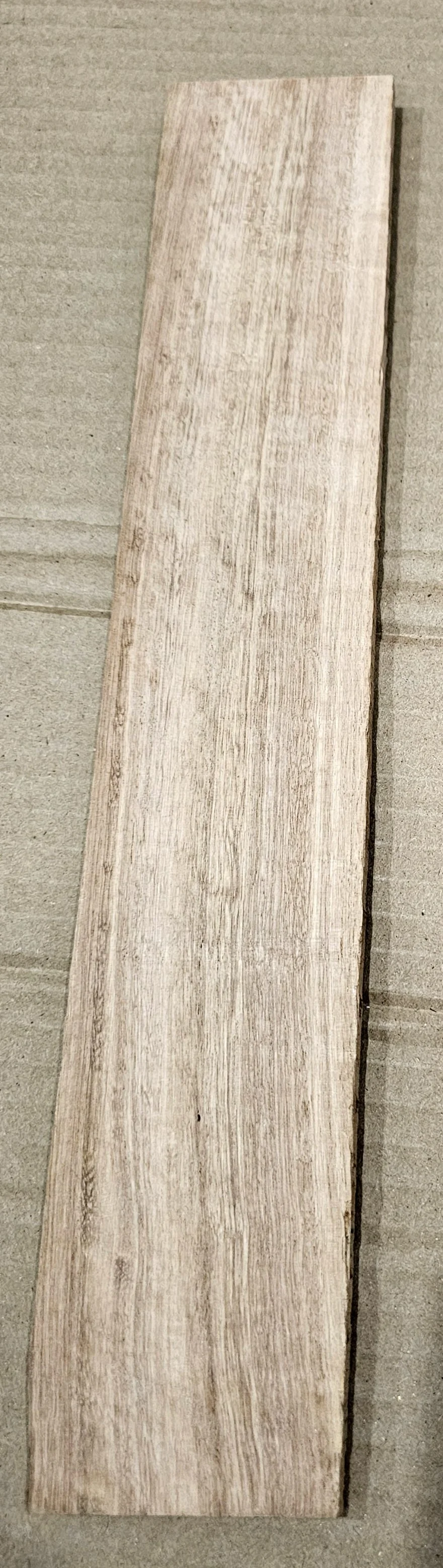 Image 2 of 4
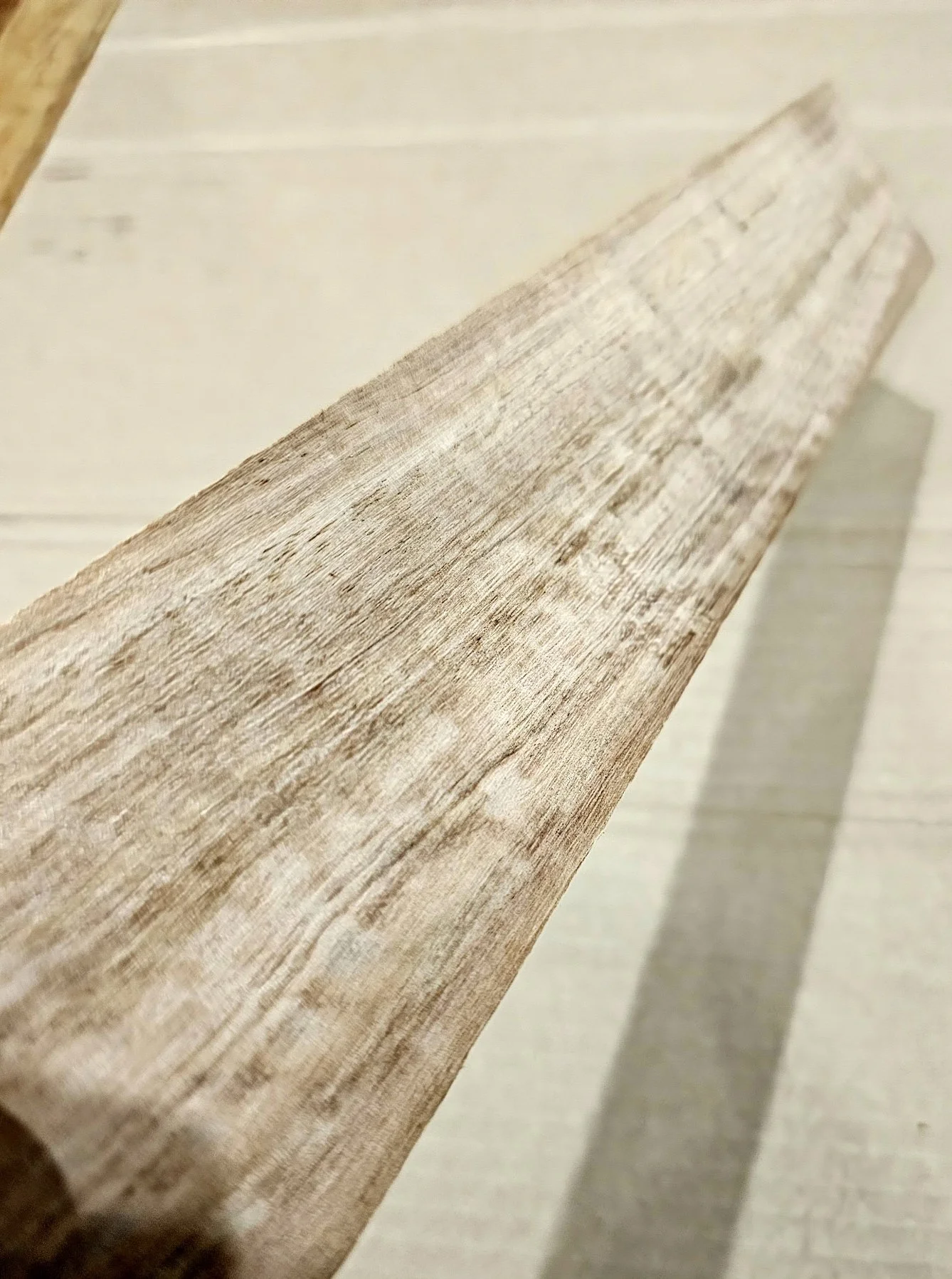 Image 3 of 4
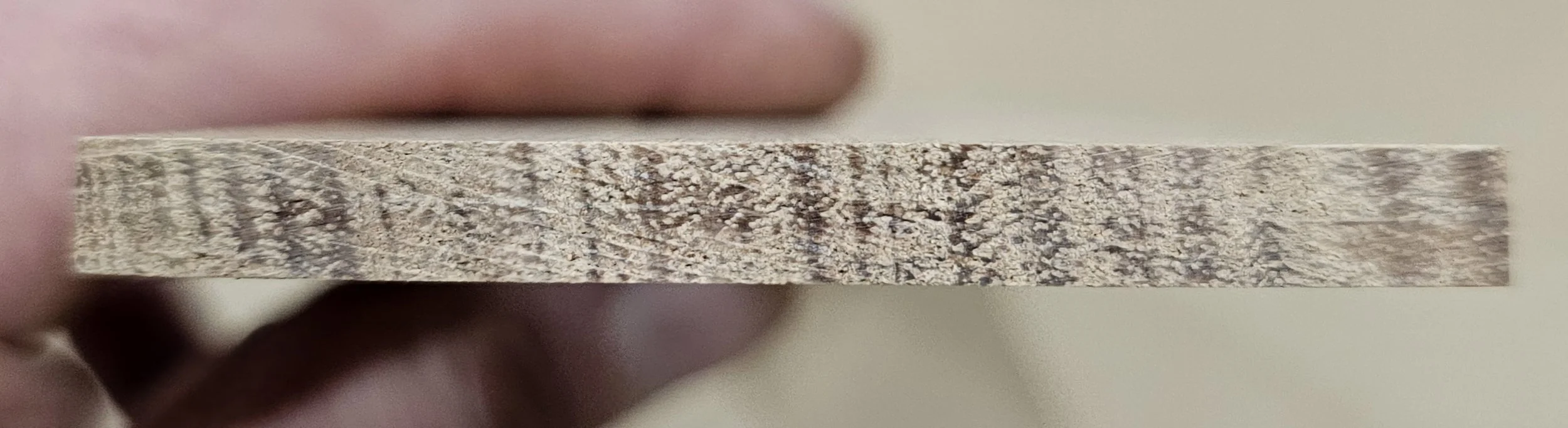 Image 4 of 4
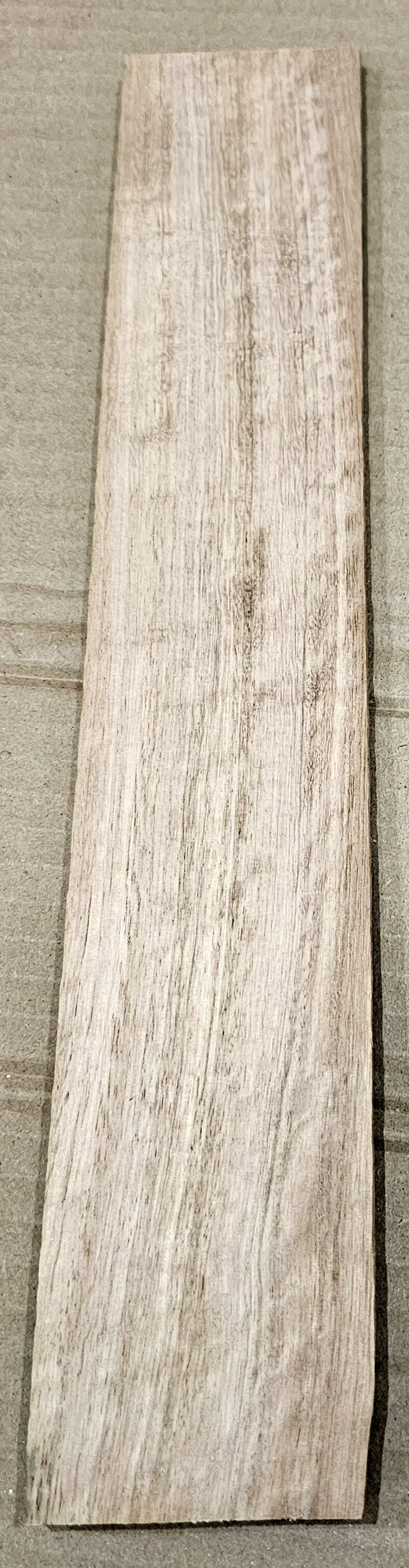
Lightly figured Tasmanian Oak soprano ukulele fretboard blank - unslotted.
Size: 340mm x 62mm x 6mm
Tasmanian oak — a collective name for several Eucalyptus species (primarily Eucalyptus regnans, E. delegatensis and E. obliqua) — is a pale, warm-toned hardwood prized for its balance of beauty, stability and workability. It exhibits a straight to slightly interlocked grain with a fine to medium texture, producing a smooth, even finish that takes stains and oils well while retaining a natural clarity that highlights figuring when present.
Qualities:
Tone and density: Medium density offers a clear, balanced acoustic response with strong midrange presence and good sustain when used in instrument construction.
Stability: Relatively stable with predictable movement when properly dried, making it suitable for necks, bodies and veneers.
Workability: Machines, sands and glues cleanly; responds well to hand tools and finishes.
Appearance: Ranges from pale honey to warm reddish-brown; subtle grain pattern complements both natural and stained finishes.
Uses:
Guitar bodies and tops (solid and laminated), necks and internal bracing where a balanced tonal character and attractive, even finish are desired.
Fingerboards and veneers when selecting higher-grade, well-figured pieces.
High-quality furniture, cabinetry and millwork requiring a refined appearance and reliable performance.
Lightly figured Tasmanian Oak soprano ukulele fretboard blank - unslotted.
Size: 340mm x 62mm x 6mm
Tasmanian oak — a collective name for several Eucalyptus species (primarily Eucalyptus regnans, E. delegatensis and E. obliqua) — is a pale, warm-toned hardwood prized for its balance of beauty, stability and workability. It exhibits a straight to slightly interlocked grain with a fine to medium texture, producing a smooth, even finish that takes stains and oils well while retaining a natural clarity that highlights figuring when present.
Qualities:
Tone and density: Medium density offers a clear, balanced acoustic response with strong midrange presence and good sustain when used in instrument construction.
Stability: Relatively stable with predictable movement when properly dried, making it suitable for necks, bodies and veneers.
Workability: Machines, sands and glues cleanly; responds well to hand tools and finishes.
Appearance: Ranges from pale honey to warm reddish-brown; subtle grain pattern complements both natural and stained finishes.
Uses:
Guitar bodies and tops (solid and laminated), necks and internal bracing where a balanced tonal character and attractive, even finish are desired.
Fingerboards and veneers when selecting higher-grade, well-figured pieces.
High-quality furniture, cabinetry and millwork requiring a refined appearance and reliable performance.